← Back to all articles
Tax Compliance and Business Growth: How Audits, Tax Planning and Management Advisory Work Together
Introduction
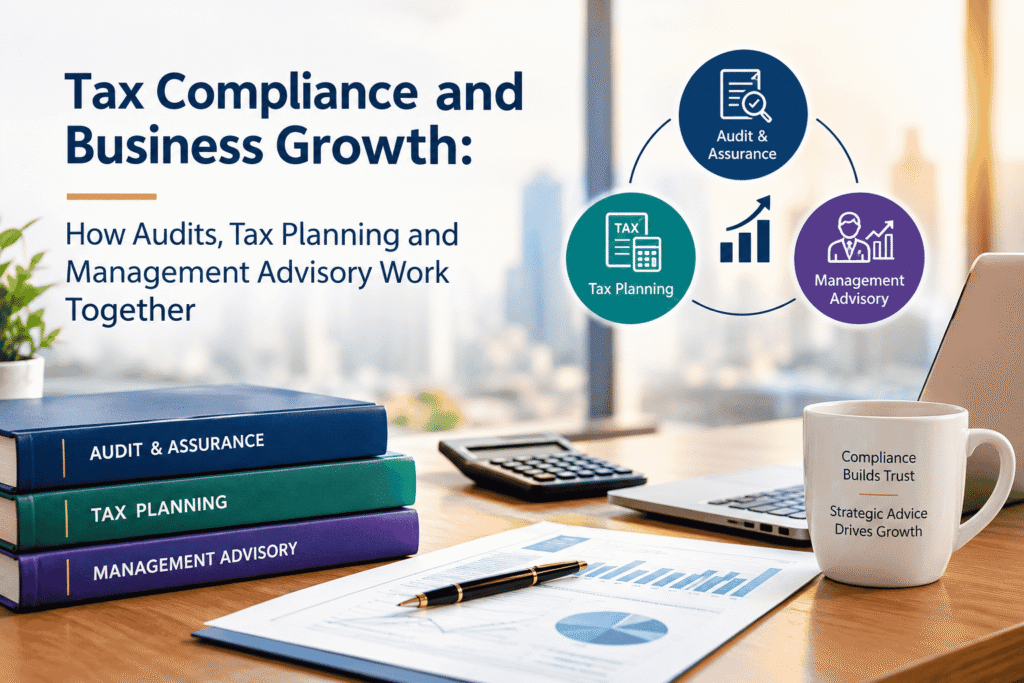
For a growing business, tax compliance is more than submitting returns on time. Reliable records, clear internal controls, well-planned tax decisions and regular financial reviews help management understand obligations and make better-informed decisions. Direct taxation, GST compliance, audit and management advisory are connected functions; when coordinated effectively, they can help reduce avoidable errors and improve visibility over business performance.
1. Direct taxation: plan before deadlines arrive
Direct tax planning begins with accurate books, a clear understanding of income and expenses, and awareness of the rules applicable to the taxpayer. Businesses should review tax positions periodically rather than waiting until return-filing time.
- Maintain organised records for income, expenses, deductions and tax payments.
- Review advance-tax obligations and key filing or response dates where applicable.
- Keep evidence for material transactions and tax positions.
- Seek advice before complex transactions, restructuring or significant changes in business activity.
2. Indirect tax and GST: make compliance a regular process
GST processes often involve sales and purchase data from different systems. Regular reconciliation helps identify missing invoices, reporting differences and potential ITC issues before they become harder to resolve.
- Match sales records with the relevant GST return data.
- Review purchase records and ITC eligibility using applicable rules and records.
- Track registrations, return filings, tax payments and refund documentation.
- Assign responsibility for reviewing exceptions and retaining supporting records.
3. Audit and assurance: build confidence in financial information
Audits and assurance engagements can help assess whether financial information and selected processes are supported by appropriate evidence. The scope depends on the engagement and statutory requirements. Businesses can prepare by keeping reconciled ledgers, invoices, bank records, contracts and schedules readily available.
- Maintain a documented record-retention process.
- Reconcile bank accounts, ledgers and key balances regularly.
- Document approvals for material expenses and transactions.
- Track audit observations and assign owners and target dates for corrective actions.
4. GST litigation: respond early when a dispute arises
Even a well-run business may receive a notice or face a disputed tax position. Promptly reviewing the issue, identifying the relevant records and tracking procedural deadlines can help the business decide on an appropriate response. Litigation support may involve notice replies, adjudication, appeals or representation, depending on the facts and applicable procedure.
5. Automated compliance: use technology with review controls
Automation can help organise recurring tasks, flag mismatches and support consistent workflows. It should not replace professional judgement or verification. Businesses should define who reviews system outputs, how exceptions are resolved and how evidence of review is retained.
- Use a compliance calendar with reminders and ownership.
- Create a repeatable checklist for each filing cycle.
- Review exception reports before submission.
- Protect access to financial and tax records and maintain an audit trail where available.
6. Management advisory: turn financial information into action
Management advisory connects financial reporting with everyday business decisions. Useful MIS reports, budgets and internal controls can help leaders monitor performance, understand cash-flow pressures and identify process weaknesses.
- Prepare regular MIS reports with clearly defined measures.
- Compare actual performance with budgets and investigate material differences.
- Review approval limits, payment controls and segregation of responsibilities.
- Use forecasts and scenario planning to support decisions about costs, capacity and growth.
A practical monthly compliance checklist
- Reconcile bank statements and key ledger balances.
- Review sales, purchases, invoices and applicable GST return data.
- Check tax-payment and filing dates on the compliance calendar.
- Follow up on missing documents and unresolved reconciliation differences.
- Review open notices, audit points and pending responses.
- Update management on cash flow, budgets and key compliance risks.
How the G Kedia & Associates services fit together
- GST Litigation: Support for notices, adjudication, appeals and representation, depending on the matter.
- Automated Compliance: Repeatable filing workflows and reconciliation support.
- Audit & Assurance: Review of financial information, audit requirements and relevant controls.
- Direct Taxation: Tax return, assessment, appeal and tax-planning support.
- Indirect Tax & GST: Registration, returns, refunds, audits and GST advisory.
- Management Advisory: MIS, budgeting, internal controls, certification and business structuring support.
Frequently asked questions
Regular reviews can identify missing records, return mismatches and upcoming obligations earlier, leaving more time to address them.
Errors or differences may lead to questions from tax authorities. Good records and reconciliations can help explain a position, while a dispute may require a separate response or appeal process.
An audit or assurance engagement has a defined scope and objective. Management advisory focuses on helping management improve reporting, controls, planning or business processes.
No. Automation can reduce repetitive work and flag exceptions, but data quality, eligibility checks and review controls remain important.
Consider professional advice for complex transactions, tax notices, material discrepancies, audit observations, appeals or uncertainty about obligations.
Conclusion / call to action
Strong tax and financial processes are built through consistent recordkeeping, timely reviews and clear accountability. G Kedia & Associates brings together taxation, GST, audit, litigation and management advisory services to support businesses across their compliance and decision-making needs. Contact the firm to discuss the support relevant to your organisation.

G Kedia & Associates is a professional consulting firm committed to delivering reliable, transparent, and result-oriented services.
Where Trust Meets Professional Excellence.